• Following Us

  • Categories

  • Check out the Archives


  • Awards & Nominations

Star Trek – Season 1 (Review)

To celebrate the release of Star Trek: Into Darkness this month, we’ll be running through the first season of the classic Star Trek all this month. Check back daily to get ready to boldly go. It’s only logical.

That came together rather well, didn’t it? With the current success of Star Trek as a blockbuster movie franchise, it’s fun to speculate about the show possibly returning to television. Being honest, I would be nervous about that. In this cut-throat age where ratings need to solidify (or start rising) almost immediately, I wouldn’t trust the first season of a Star Trek spin-off to rope in viewers quick enough. None of the Star Trek spin-offs, from The Next Generation through to Enterprise, had what could be considered “strong” first years. Occasionally there were a few classic episodes buried in there, as with Deep Space Nine, but it always seems to take a Star Trek show some time to find its “space legs”, so to speak. Time that I am not sure it would be afforded in the current market place.

Which makes it all the more spectacular that Star Trek itself started out so phenomenally. The first year of the show (and the franchise) is not only the best first season of any Star Trek show ever, it’s also in the running for the best of the thirty seasons of television that the franchise has produced. Not bad at all, considering that it seems like nobody had any idea what exactly they were doing when they started out.
tos-miri18

Continue reading

Star Trek (Gold Key) #56 – No Time Like the Past (Review)

To celebrate the release of Star Trek: Into Darkness this month, we’ll be running through the first season of the classic Star Trek all this month. Check back daily to get ready to boldly go. It’s only logical.

We’ll be supplementing our coverage of the episodes with some additional materials – mainly novels and comics and films. This is one such entry.

It’s remarkable to think that Star Trek was kept alive in the decade between the airing of The Turnabout Intruder and Star Trek: The Motion Picture. The most popular television show to air in the 1968 and 1969 season was Rowan and Martin’s Laugh-In, a show that was apparently lucky to receive two “best of” DVD collections in the early part of the last decade, collecting a grand total of eight of the 140 episodes. Given that Star Trek didn’t even rank among the twenty highest rated shows of that broadcast season, it’s incredible that the show endured for so long.

To be fair, there is a lot of material which fills the gap between the last episode of the live action television show and the first feature film. There was Star Trek: The Animated Series, perhaps the most high-profile release. There were a few novels, even if the tie-in line wouldn’t necessarily take off until the eighties. And there were the comic books, produced by Gold Key, notable as perhaps the largest publisher of non-superhero comics in the seventies.

These comics weren’t classics. It’s hard to argue that they are essential additions to the mythos, or that anybody would miss anything be ignoring them entirely. However, there’s a weird pulpy sci-fi charm to these stories that makes them interesting, even when you would wonder whether the artist or writer had actually watched any episodes of the show they were apparently adapting.

Trippy!

Trippy!

Continue reading

Star Trek – Operation — Annihilate!

To celebrate the release of Star Trek: Into Darkness this month, we’ll be running through the first season of the classic Star Trek all this month. Check back daily to get ready to boldly go. It’s only logical.

How do you follow The City on the Edge of Forever? The previous episode is one of the best-loved episodes of Star Trek ever produced, one of the great science-fiction television episodes of the sixties, and one of the best science-fiction romances ever written. It’s a gigantic and massively influential piece of television, one of the cornerstones of Star Trek and perhaps the best indicator of just how thoughtful and how genuine the franchise can be when it tries. So, what’s next? Where do we go from here? What is the next shot after that last scene of Kirk abandoning the Guardian of Forever on a desolate rock?

It’s always interesting to compare the first season of Star Trek to the first year of Star Trek: The Next Generation. The former can be counted among the very best of the show’s thirty televised seasons, while the latter can be counted among the worst. However, they do have something in common. They both probably should have ended an episode early, with The City on the Edge of Forever and Conspiracy serving as effective caps on each show’s first season, leaving the audience a chance to digest what they had seen.

Unfortunately, neither show ended on anything that could be measured among the strongest show of a given year. The Neutral Zone ended the first season of The Next Generation with a moralising whimper. While Operation — Annihilate! is quite entertaining on its own terms, it doesn’t rank among the best of the season. Still, it’s a solid pulpy science-fiction tale, which might not be the worst thing.

Man of action!

Man of action!

Continue reading

Star Trek – Crucible: McCoy – Provenance of Shadows by David R. George III (Review)

To celebrate the release of Star Trek: Into Darkness this month, we’ll be running through the first season of the classic Star Trek all this month. Check back daily to get ready to boldly go. It’s only logical.

We’ll be supplementing our coverage of the episodes with some additional materials – mainly novels and comics and films. This is one such entry.

The classic Star Trek was not really a character-driven show. Of course, everybody recognises Kirk, Spock and McCoy, but the show seldom took the time to really dig into their history or origins. We’d occasionally find out that Kirk had some overlap with the villain of the week. He had served on a starship that had been the victim of a vampire space cloud, or lived on a colony during a brutal massacre. These details added up to something, along with the occasional reference to (and eventual death of) his brother Sam.

Spock got a bit more development, probably due to the fact that he was an alien. After all, developing Spock meant developing an entire exotic alien species, and offered some insight into how Vulcans must live. We’d also get occasional factoids or tidbits (Vulcans can mind meld, they have inner eyes, they had a schism millennia ago) that help to give a concrete picture of the where the character came from and where he might like to go.

McCoy, on the other hand, was a bit of a blank slate. Everybody knows McCoy. He’s the irritable surgeon on the ship, prone to insulting Spock and complaining about the fact that he’s flying through space in a ship filled with mechanical doo-hickeys. However, we never really get a sense of McCoy’s past. We never learn much about his family on-screen, except when the writers wanted a bit of dramatic fodder in the penultimate movie featuring the original cast, Star Trek V: The Final Frontier. But we don’t talk about that.

So David R. George III’s Crucible: McCoy – Provenance of Shadows is an interesting book. Not only because it is a book completely devoted to the least-developed of the iconic leading trio, but also because this relatively under-developed character also gets one of the longest Star Trek tie-in books ever written. And without too much focus on his past.

tos-cruciblemccoy

Continue reading

Star Trek – The City on the Edge of Forever (Review)

To celebrate the release of Star Trek: Into Darkness this month, we’ll be running through the first season of the classic Star Trek all this month. Check back daily to get ready to boldly go. It’s only logical.

The City on the Edge of Forever stands as both on of the most troubled episodes of Star Trek ever produced, and one of the most brilliant. It’s a powerful science-fiction romance, cleverly constructed and smoothly executed. Everything in the episode seems to working smoothly, which seems all the more improbable given the difficulties occurring behind the scenes. Harlan Ellison’s teleplay differs significantly from the finished product, but it’s very hard to argue that the televised episode isn’t among the finest Star Trek stories ever produced.

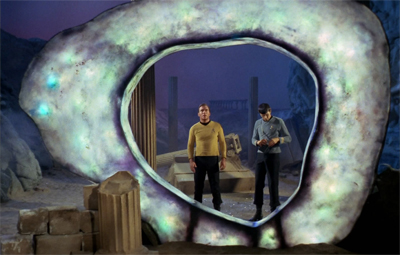
The hole in things...

The hole in things…

Continue reading

Star Trek – The City on the Edge of Forever by Harlan Ellison/Cordwainer Bird (Review)

To celebrate the release of Star Trek: Into Darkness this month, we’ll be running through the first season of the classic Star Trek all this month. Check back daily to get ready to boldly go. It’s only logical.

We’ll be supplementing our coverage of the episodes with some additional materials – mainly novels and comics and films. This is one such entry.

The City on the Edge of Forever had a troubled history, not that you’d know it based on what appeared on screen. Like quite a few classic Star Trek episodes (The Enemy Within, The Doomsday Machine, Amok Time), it was developed from a script written by a giant of science-fiction. Harlan Ellison is a respected author with a considerable reputation. However, the version of The City on the Edge of Forever which eventually made it to screen at the end of the show’s first season is radically different from the version Ellison original wrote. “It’s not the vision I had,” Ellison quotes at the start of the paperback edition of his original screenplay, released in 1996.

The book is a fantastic read, and well worth a look for anybody with any interest in Star Trek or Ellison, or even good science-fiction or the craft of television writing. Reading the various drafts, there’s no denying that it is a phenomenal script, as good as the script that eventually went into production. At the same time, it’s also quite clear that it would not have made for as classic a Star Trek episode.

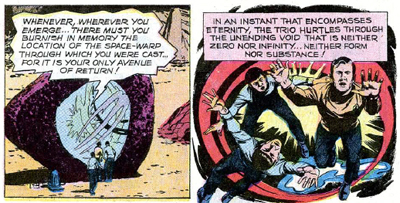
Into the vortex...

Into the vortex…

Continue reading

Star Trek – Errand of Mercy (Review)

To celebrate the release of Star Trek: Into Darkness this month, we’ll be running through the first season of the classic Star Trek all this month. Check back daily to get ready to boldly go. It’s only logical.

Ah, Klingons. It feels strange to think that we’re almost at the end of the show’s first year and that we’re only meeting the franchise’s most famous aliens now. More than that, in the original version of the show, their distinctive model space ships didn’t appear until the third season, in Elaan of Troyius, the same episode where their iconic imperial crest appeared. They wouldn’t get their bumpy foreheads for over a decade, until Star Trek: The Motion Picture. And a lot of what we’d take for granted about Klingon culture would only be established in the tie-in novel The Final Reflection and later in Star Trek: The Next Generation.

Still, Errand of Mercy welcomes the Klingons to the franchise, and offers a demonstration of why the aliens had such staying power. It’s also a rather wonderful Cold War analogy, feeling like something of a companion piece to Gene L. Coon’s A Taste of Armageddon.

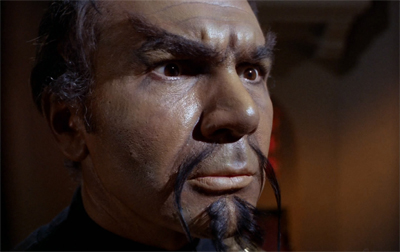
I bet a lot of people were surprised that they could Klingon to their reputation as Star Trek's top alien for so long...

I bet a lot of people were surprised that they could Klingon to their reputation as Star Trek’s top alien for so long…

Continue reading

Star Trek – The Final Reflection by John M. Ford (Review)

To celebrate the release of Star Trek: Into Darkness this month, we’ll be running through the first season of the classic Star Trek all this month. Check back daily to get ready to boldly go. It’s only logical.

We’ll be supplementing our coverage of the episodes with some additional materials – mainly novels and comics and films. This is one such entry.

The Final Reflection was written in 1984. Development on Star Trek: The Next Generation would only be announced in 1986. Sure, there were a bunch of successful movies being produced, but these only amounted to a couple of hours of Star Trek once every few years. And, even then, the movies were aimed at a much broader audience, without the same development and continuity that a television show could offer. Not that Star Trek ever really had that tight a sense of continuity, of course, but it must have seemed unlikely that things could ever go back to the way they had been. Certainly, in 1984, nobody could have anticipated the eighteen-straight years of Star Trek running from Encounter at Farpoint to These Are the Voyages.

As a result, fans had to look to other avenues to expand and develop the rich Star Trek universe. The novels were one such avenue, although they developed slowly. Mission to Horatius had been published while the show was on the air, but it was very clearly aimed at a younger audience. Spock Must Die! would be published in 1970. However, the spin-off fiction developed relatively slowly. Star Trek had yet to become a massive franchise with tie-in multimedia commercial opportunities.

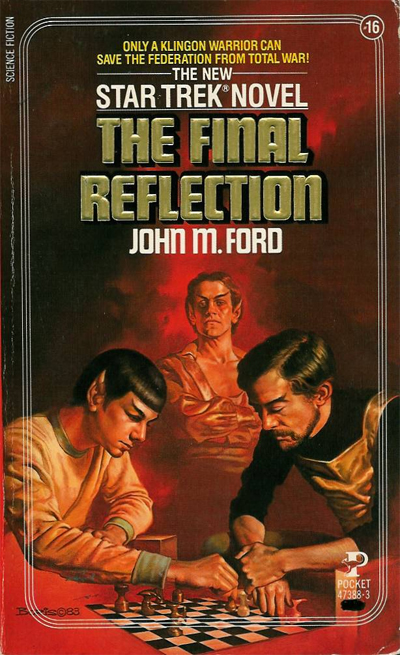
Perhaps because the Star Trek novels had not quite turned into a massive franchising opportunity, and they weren’t under the same level of publicity or scrutiny that they would be in the years to come, writer John M. Ford was able to do something quietly revolutionary with his first Star Trek novel, The Final Reflection. He was able to venture away from our core cast of iconic characters and instead develop the Klingon Empire.

More than that, though, he was able to paint the Klingons as the good guys.

tos-thefinalreflection5

Continue reading

Non-Review Review: Blood (2013)

Blood feels a little too familiar on times, verging on cliché. Director Nick Murphy crafts a rich and atmospheric take on a story we’ve seen quite often before. A story of brothers keeping a dark secret, of the way that the islands off the coast of Britain seem to operate under their own law, of the way that guilt and secrets eat us from the inside out. It looks and sounds impressive, with the cast delivering powerhouse performances, George Richmond’s cinematography evoking a harsh wasteland where rules seem looser and myth intermingles with fact, and Daniel Pemberton’s score setting a suitably ominous note.

I wanna take you to the island...

I wanna take you to the island…

Continue reading

Star Trek – The Devil in the Dark (Review)

To celebrate the release of Star Trek: Into Darkness this month, we’ll be running through the first season of the classic Star Trek all this month. Check back daily to get ready to boldly go. It’s only logical.

There are any number of ways to “get into” Star Trek, to jump on board the cult phenomenon. Despite decades of continuity, a lot of the franchise is accessible on its own terms, and it’s easy enough to come across a list of recommended classic episodes for a neophyte to sample. There are over seven hundred hours of Star Trek, so there’s something for everybody. And it’s perfectly possible to tailor a recommendation to the new viewer’s preferences.

Want proof that Star Trek can do credible drama? Stick on The City on the Edge of Forever. Fascinated by Spock? Try Amok Time. Want to watch William Shatner take on another leading character with a similar amount of gravitas? Give Space Seed a go. Want some high-concept sci-fi android stuff? Maybe What Are Little Girls Made Of? is right up your street. Want a contemporary commentary on the Vietnam War? Watch A Private Little War.

However, if you asked me to recommend an example of the franchise’s philosophy and its humanist values, executed with a superb level of craftsmanship, The Devil in the Dark is really the only choice. There’s a reason that Arthur C. Clarke considers it to be the most memorable episode of Star Trek ever produced.

Spock would have to have a heart of stone not be affected by this...

Spock would have to have a heart of stone not be affected by this…

Continue reading