












This January and February, we’ll be finishing up our look at the second season of Star Trek: The Next Generation and moving on to the third year of the show, both recently and lovingly remastered for high definition. Check back daily for the latest review.
We’ll be supplementing our coverage of the episodes with some additional materials – mainly novels and comics and films.
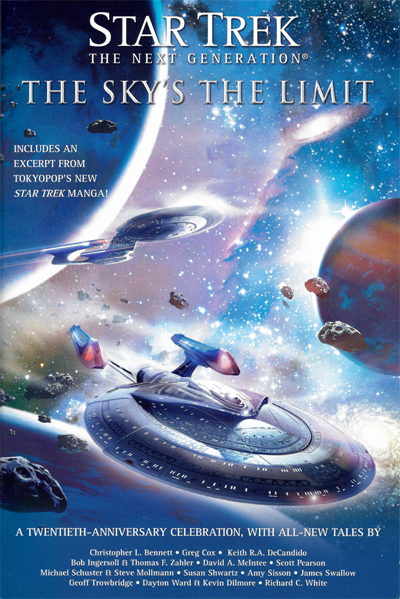
Suicide Note is another one of those great “expanding from dangling plot threads left at the conclusion of an episode of Star Trek: The Next Generation“ stories that are popular in tie-in media. In this case, writer Geoff Trowbridge is building off the end of The Defector, which saw Captain Picard receiving a suicide note from the eponymous defector Admiral Jarok. Jarok had asked Picard to pass the not on to his family, which was not possible at the time.
Of course, The Next Generation never really dealt with these threads, because – put quite simply – it wasn’t that kind of show. So it’s fun to pick up these threads and to try to recontextualise them in terms of everything that has unfolded since. In this case, Trowbridge is able to explore Jarok’s sacrifice in the context of the Federation and Romulan alliance towards the end of Star Trek: Deep Space Nine, in the wake of In the Pale Moonlight.
In keeping with Trowbridge’s The Chimes at Midnight, Suicide Note is structured as a critical exploration of American history, through the prism of Star Trek. While The Chimes at Midnight was a brutal deconstruction of the franchise’s roots in the Second World War, Suicide Note is framed in a more modern context.
Filed under: The Next Generation | Tagged: betrayal, geoff trowbridge, imperialism, in the pale moonlight, moral relativity, romans, romulans, space romans, the defector, the romulan star empire | Leave a comment »



 the m0vie blog