












To celebrate the release of Star Trek: Into Darkness this month, we’ll be running through the first season of the classic Star Trek all this month. Check back daily to get ready to boldly go. It’s only logical.
I think it’s fair to say that Star Trek had some gender issues. I say that as a fan of the show, and as a person with an immense fondness for the ensemble. It’s tempting to write off those sexist moments and decisions as attitudes that were socially acceptable at the time. After all, the sixties are almost half a lifetime away at this point. However, that doesn’t account for the fact that many of the same gender issues plagued Star Trek: The Next Generation in the late eighties, which lost two of its three female leads in its first season, and opened its second year by subjecting the remaining female lead to The Child.
Even disregarding that, though, there comes a point where even the time when a work was produced can’t excuse certain attitudes or approaches. Star Trek doesn’t feature too many strong female characters, relegating recurring female characters like Uhura and Janice Rand to the background. This is dodgy enough, but the show’s problems with gender become a lot more obvious when a show throws sexuality into focus. Mudd’s Women is such a show. It famously introduced one of the few recurring non-crewmember characters, and it plays into the “Star Trek as space western” theme, but it is also very sexist. Very, very sexist.
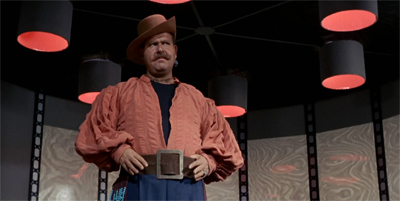
Mudd-ying the waters…
Filed under: The Original Series | Tagged: Alice Eve, Benedict Cumberbatch, games, gene roddenberry, Harry Mudd, Janice Rand, kirk, Klingon, Leonard McCoy, List of Star Trek characters, List of Star Trek characters (G–M), Mudd, Roddenberry, science fiction, Space Combat, star trek, Star Trek Games, Star Trek Next Generation, Television and Movies, video games, Where No Man Has Gone Before | Leave a comment »



 the m0vie blog