• Following Us

  • Categories

  • Check out the Archives


  • Awards & Nominations

Star Trek – Burning Dreams by Margaret Wander Bonanno (Review)

To celebrate the release of Star Trek: Into Darkness this month, we’ll be running through the first season of the classic Star Trek all this month. Check back daily to get ready to boldly go. It’s only logical.

We’ll be supplementing our coverage of the episodes with some additional materials – mainly novels and comics and films. This is one such entry.

It’s amazing just how iconic and influential the character of Christopher Pike is, despite the fact that he only appeared as a guest character in a two-part episode of the first season of Star Trek. Of course, he was the lead character of a pilot that was filmed in 1964, but not aired until almost a quarter of a century later, but it still seems strange that the character should hold such sway over Star Trek fandom. Perhaps it’s a sign of how preoccupied fans are with trivia and minutiae. Maybe it’s a sign of how skilfully Star Trek cultivates holes in its own mythology (in this case Pike’s time as captain) for the fans to fill. It might even be the lingering sense of tragedy surrounding the “captain who never was”, played by an actor who died at the young age of 42.

Whatever the reason, it feels appropriate that Pike was one of the characters celebrated and included in the franchise’s 40th anniversary celebrations, and the character is well served by the decision to task Margaret Wander Bonanno with writing “the definitive Pike novel.”
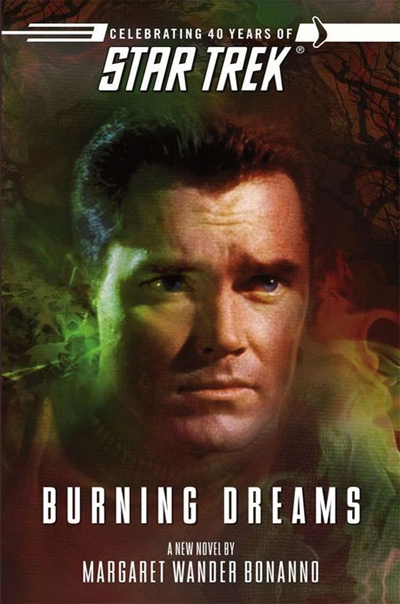
tos-burningdreams

Continue reading

Star Trek – The Menagerie, Part I (Review)

To celebrate the release of Star Trek: Into Darkness this month, we’ll be running through the first season of the classic Star Trek all this month. Check back daily to get ready to boldly go. It’s only logical.

Ah, clip shows. The bane of modern television. Okay, I’m being a bit harsh. After all, home media is a relatively recent invention. Up until the past couple of decades, it seemed that most people would only catch their television shows on… well, television. The audience was generally thought to be somewhat transient, the realities of scheduling and life making it highly unlikely that everybody would see everything. Indeed, most fans of old television shows found themselves at the mercy of fickle network schedules. Particularly for long-running shows, it was reasonable to assume that a significant portion of your audience might not be intimately familiar with the show.

Of course, the emergence of DVD box sets and on-line streaming have radically changed the way that television operates. Most obviously, there has been a massive a swing towards serialisation in the past few years, overlapping with the expansion of home media. While it’s tough to imagine a show like The Wire or Game of Thrones working in the early nineties, the fact that people can record and download and own their television shows means that producers can get away with assuming that everybody has seen everything.

What I’m getting at here  is that there was a time when clip shows were an understandable, maybe even desirable, part of the network television landscape. They could bring new viewers up to speed, or allow old viewers to celebrate the favourite parts of the show that they would otherwise never see again. Indeed, The Menagerie, the only two-part episode of the classic Star Trek, has a better excuse than most. The clip sections of this adventure are taken from the 1964 pilot, The Cage. Not only was this footage two years old when The Menagerie was broadcast, it had also never been aired.

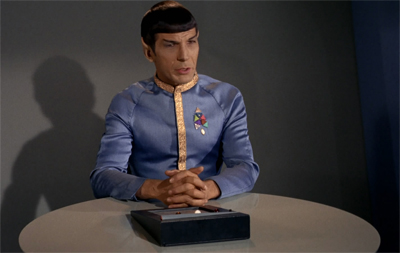
Spock the difference...

Spock the difference…

Continue reading

Star Trek: Early Voyages #12-15 – Futures, Parts I, II, III & IV (Review)

To celebrate the release of Star Trek: Into Darkness this month, we’ll be running through the first season of the classic Star Trek all this month. Check back daily to get ready to boldly go. It’s only logical.

We’ll be supplementing our coverage of the episodes with some additional materials – mainly novels and comics and films. This is one such entry.

As we discussed before, Star Trek: Early Voyages is about as close to a series starring Christopher Pike as we are ever likely see. A monthly comic book running for about a year-and-a-half, told by Dan Abnett and Ian Edginton, the book followed the adventures of Christopher Pike’s Enterprise, a prelude to the classic Star Trek television show, filling some gaps left by The Cage and The Menagerie. However, the comic had the benefit of being told after a lot of Star Trek had aired.

First published in 1997, it hit stands after the big-screen adventures of the Kirk era had officially wrapped up in Star Trek: Generations, and long after Star Trek: The Next Generation had gone off the air. Even Star Trek: Deep Space Nine was more than half way through its run. This puts Early Voyages in an interesting place. It is set in the past, but knows how the future plays out. The epic four-part Futures storyline plays with this concept, offering us a glimpse of an imperfect future where Captain Kirk is a rogue running a cargo ship, the Klingons have annexed considerable portions of the Federation and are on the verge of war…

Oh, and Christopher Pike is happy. That’s how you know it’s a flawed universe.

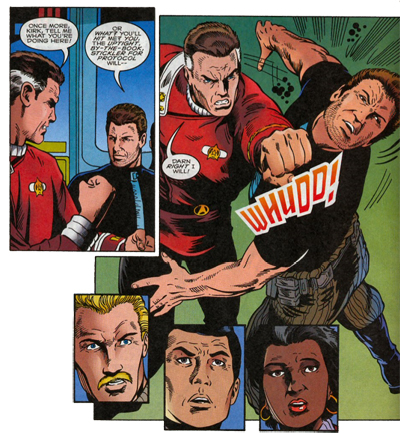
"And THAT is for stealing my show!"

“And THAT is for stealing my show!”

Continue reading

Star Trek – Court Martial (Review)

To celebrate the release of Star Trek: Into Darkness this month, we’ll be running through the first season of the classic Star Trek all this month. Check back daily to get ready to boldly go. It’s only logical.

It’s hard not to be impressed by the sheer versatility of Star Trek as a format. For a show about exploring the universe, the creators have really managed to incorporate just about any and all genres of television story. Over the franchise’s 700-episode history, there’s been a wealth of quirky episodes that explore types of stories that one might consider quite surreal for a show about a ship travelling to the stars. A court room episode might not be the most radical of these shifts, but Court Martial is still fascinating as an evolution of Star Trek as a concept, broadening the kind of stories that could be told within a Star Trek framework. After all, the fact that there’s a whole subgenre of Star Trek involving court room drama is probably rooted in this first-season adventure.

While its influence is absolutely massive, Court Martial is still a problematic episode. Despite demonstrating what writers could really do within the context of the show, Court Martial suffers because it’s really not that good.

Running rings around the prosecution...

Running rings around the prosecution…

Continue reading

Star Trek – The Galileo Seven (Review)

To celebrate the release of Star Trek: Into Darkness this month, we’ll be running through the first season of the classic Star Trek all this month. Check back daily to get ready to boldly go. It’s only logical.

It’s amazing to think that only now, almost half-way through the first year of Star Trek, the show is doing a Spock-centric episode. Spock is an iconic and instantly recognisable part of Star Trek lore, to the point that Leonard Nimoy’s version of the character served as the link between the classic series and JJ Abrams’ 2009 reboot of the franchise. The character appeared in The Cage, the very first episode of Star Trek ever produced. He is perhaps even more iconic than James T. Kirk himself.

So it feels slightly weird, then, that The Galileo Seven should serve as the first episode of the series completely devoted to Spock as a character, pushing Jim firmly to the background as we get a look at Spock’s first command experience.

Talk about carrying dead weight...

Talk about carrying dead weight…

Continue reading

Star Trek – The Conscience of the King (Review)

To celebrate the release of Star Trek: Into Darkness this month, we’ll be running through the first season of the classic Star Trek all this month. Check back daily to get ready to boldly go. It’s only logical.

The Conscience of theKing continues the work of Balance of Terror in fleshing out the fictional universe of Star Trek. While the first few episodes of the show gave little thought to this universe’s shared history and our characters’ origins, The Conscience of the King offers us a glimpse into the past of Captain James T. Kirk. Like Dagger of the Mind, another episode borrowing its title from Shakespeare, it builds off the suggestion that humanity is still a long way from perfection, and that the fact we have reached the cold expanse of space does not mean that our troubles can be left entirely behind. In contrast to some of Roddenberry’s later decisions about the Star Trek franchise, it is clear that utopia is a path, and not a clear destination.

His mask is slipping...

His mask is slipping…

Continue reading

Star Trek – Miri (Review)

To celebrate the release of Star Trek: Into Darkness this month, we’ll be running through the first season of the classic Star Trek all this month. Check back daily to get ready to boldly go. It’s only logical.

It is amazing how Star Trek manages to deftly balance the absurd with the horrific, the bizarre with the terrifying and the camp with the truly haunting. It’s something that’s really unique to the first iteration of the show, that deft ability to go completely for broke, willing to look completely ridiculous without any hint of embarrassment or modesty. Any of the spin-offs would be too conservative and too dignified to attempt anything quite as insane as Miri, with the failure of episodes like Move Along Home demonstrating that it’s impossible to replicate the freedom and the enthusiasm of the original show.

As a result, Miri is a wonderfully weird hour of television, one which is – on just about any level – incredibly wacky. And yet, despite that truly “out there” approach, it’s also a strangely compelling and engaging example of Star Trek.

Feels like going home...

Feels like going home…

Continue reading

Star Trek – Errand of Vengeance: The Edge of the Sword by Kevin Ryan (Review)

To celebrate the release of Star Trek: Into Darkness this month, we’ll be running through the first season of the classic Star Trek all this month. Check back daily to get ready to boldly go. It’s only logical.

We’ll be supplementing our coverage of the episodes with some additional materials – mainly novels and comics and films. This is one such entry.

When you think about it, Star Trek finished its first season with its mythology reasonably well established. There were the Romulans, the Klingons and the Federation. (Oh, my!) We knew that Kirk had a brother on the colonies, who died in the season finalé. Vulcan was a hot desert planet. The Prime Directive existed, and we even got a taste of how Starfleet operated. However, these things all developed gradually over the course of the year, and early episodes couldn’t even seem to agree who exactly Kirk was working for.

The Federation was first mentioned in Arena and only fully named in A Taste of Armageddon. The Klingons were introduced in Errand of Mercy, with a cold war between the two galactic powers finally turning hot. Of course, it’s hard to write “finally” when they had only been introduced in this particular episode. So where were the Klingons during the show’s first year? How come we didn’t pick up any of the tension that must have been simmering?

Kevin Ryan’s Errand of Vengeance trilogy attempts to offer some context, suggesting that the Klingon threat had been brewing during the entire first season. It follows Jon Anderson, a new recruit to the ship’s security department, arriving just before the events of What Are Little Girls Made Of? Oh, and he’s a Klingon infiltrator.

tos-errandofvengeance1

Continue reading

Non-Review Review: Star Trek – Into Darkness

Note: This is a spoiler-heavy review. If you want a spoiler-lite recommendation, click here. If not, continue at your own risk.

Towards the climax of Star Trek: Into Darkness, Kirk and the Enterprise flee an aggressor by entering warp. At that speed, several factors the speed of light itself, they surmise that they must be safe from their pursuer. Of course, they prove to be wrong – brutally so. Everything in Into Darkness moves fast, so fast that the Enterprise’s top speed seems more like a casual jog than a breakneck acceleration. The plot rockets along with incredible speed, from plot point to plot point, counting on the momentum to sustain the film and carry it across the line.

There is enough material here to produce a trilogy of films. Indeed, cynics might suggest that a lot of the movie’s iconography and plot points are indeed recycled from the central “trilogy” of the original Star Trek films, running from the homages to Star Trek II: The Wrath of Khan right down a climactic visual reference to Star Trek IV: The Voyage Home. Abrams and his team of writer continue their work from 2009’s breakout blockbuster Star Trek by putting the franchise’s most compelling images and cues into a high-speed blender.

Into Darkness just substantially increases the concentration.

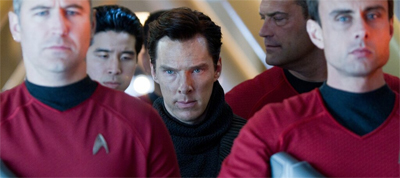
Seeing red...

Seeing red…

Continue reading

Star Trek – What Are Little Girls Made Of? (Review)

To celebrate the release of Star Trek: Into Darkness this month, we’ll be running through the first season of the classic Star Trek all this month. Check back daily to get ready to boldly go. It’s only logical.

What Are Little Girls Made Of? is the first episode from a script written by Robert Bloch, perhaps best known as the author of Psycho. Interestingly, it wasn’t the first script Bloch wrote for the show. Apparently Bloch contributed Catspaw first, when the show asked him for a Halloween special, even though it wouldn’t be produced until the series’ second year. And, to be fair, you can sense that What Are Little Girls Made Of? is a bit more comfortable with the Star Trek conventions than Bloch’s other two episodes. An uncredited re-write from Gene Roddenberry probably helped.

With Bloch’s third script, Wolf in the Fold, serving as a loose adaptation of (or spiritual successor to) his celebrated short story Yours Truly, Jack the RipperWhat Are Little Girls Made Of? stands out among Bloch’s contributions to the show. It’s an iconic episode, one that has undoubtedly influenced the way that we remember Star Trek, serving as the source for all manner of Star Trek memes like Kirk overwhelming a hot android with his sexual charisma, and defeating a less physically attractive robot with a logic puzzle. It features some of the most iconic costuming of the original Star Trek show, and also serves as the root of the whole “what constitutes life?” philosophical strand that would find itself embodied by Data on Star Trek: The Next Generation.

It helps that, like so much of this first season of Star Trek, it is just good pulpy fun.

A cold reception...

A cold reception…

Continue reading