• Following Us

  • Categories

  • Check out the Archives


  • Awards & Nominations

Star Trek – Season 1 (Review)

To celebrate the release of Star Trek: Into Darkness this month, we’ll be running through the first season of the classic Star Trek all this month. Check back daily to get ready to boldly go. It’s only logical.

That came together rather well, didn’t it? With the current success of Star Trek as a blockbuster movie franchise, it’s fun to speculate about the show possibly returning to television. Being honest, I would be nervous about that. In this cut-throat age where ratings need to solidify (or start rising) almost immediately, I wouldn’t trust the first season of a Star Trek spin-off to rope in viewers quick enough. None of the Star Trek spin-offs, from The Next Generation through to Enterprise, had what could be considered “strong” first years. Occasionally there were a few classic episodes buried in there, as with Deep Space Nine, but it always seems to take a Star Trek show some time to find its “space legs”, so to speak. Time that I am not sure it would be afforded in the current market place.

Which makes it all the more spectacular that Star Trek itself started out so phenomenally. The first year of the show (and the franchise) is not only the best first season of any Star Trek show ever, it’s also in the running for the best of the thirty seasons of television that the franchise has produced. Not bad at all, considering that it seems like nobody had any idea what exactly they were doing when they started out.
tos-miri18

Continue reading

Star Trek: Early Voyages #12-15 – Futures, Parts I, II, III & IV (Review)

To celebrate the release of Star Trek: Into Darkness this month, we’ll be running through the first season of the classic Star Trek all this month. Check back daily to get ready to boldly go. It’s only logical.

We’ll be supplementing our coverage of the episodes with some additional materials – mainly novels and comics and films. This is one such entry.

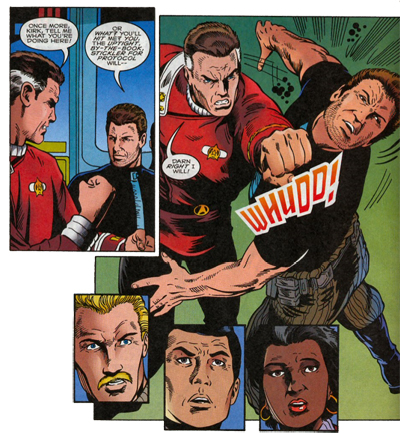
As we discussed before, Star Trek: Early Voyages is about as close to a series starring Christopher Pike as we are ever likely see. A monthly comic book running for about a year-and-a-half, told by Dan Abnett and Ian Edginton, the book followed the adventures of Christopher Pike’s Enterprise, a prelude to the classic Star Trek television show, filling some gaps left by The Cage and The Menagerie. However, the comic had the benefit of being told after a lot of Star Trek had aired.

First published in 1997, it hit stands after the big-screen adventures of the Kirk era had officially wrapped up in Star Trek: Generations, and long after Star Trek: The Next Generation had gone off the air. Even Star Trek: Deep Space Nine was more than half way through its run. This puts Early Voyages in an interesting place. It is set in the past, but knows how the future plays out. The epic four-part Futures storyline plays with this concept, offering us a glimpse of an imperfect future where Captain Kirk is a rogue running a cargo ship, the Klingons have annexed considerable portions of the Federation and are on the verge of war…

Oh, and Christopher Pike is happy. That’s how you know it’s a flawed universe.

"And THAT is for stealing my show!"

“And THAT is for stealing my show!”

Continue reading

Star Trek – Miri (Review)

To celebrate the release of Star Trek: Into Darkness this month, we’ll be running through the first season of the classic Star Trek all this month. Check back daily to get ready to boldly go. It’s only logical.

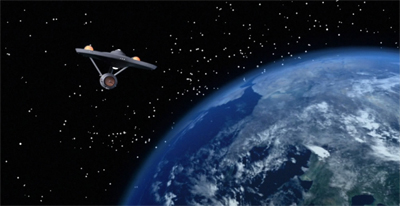
It is amazing how Star Trek manages to deftly balance the absurd with the horrific, the bizarre with the terrifying and the camp with the truly haunting. It’s something that’s really unique to the first iteration of the show, that deft ability to go completely for broke, willing to look completely ridiculous without any hint of embarrassment or modesty. Any of the spin-offs would be too conservative and too dignified to attempt anything quite as insane as Miri, with the failure of episodes like Move Along Home demonstrating that it’s impossible to replicate the freedom and the enthusiasm of the original show.

As a result, Miri is a wonderfully weird hour of television, one which is – on just about any level – incredibly wacky. And yet, despite that truly “out there” approach, it’s also a strangely compelling and engaging example of Star Trek.

Feels like going home...

Feels like going home…

Continue reading

Star Trek – Errand of Vengeance: The Edge of the Sword by Kevin Ryan (Review)

To celebrate the release of Star Trek: Into Darkness this month, we’ll be running through the first season of the classic Star Trek all this month. Check back daily to get ready to boldly go. It’s only logical.

We’ll be supplementing our coverage of the episodes with some additional materials – mainly novels and comics and films. This is one such entry.

When you think about it, Star Trek finished its first season with its mythology reasonably well established. There were the Romulans, the Klingons and the Federation. (Oh, my!) We knew that Kirk had a brother on the colonies, who died in the season finalé. Vulcan was a hot desert planet. The Prime Directive existed, and we even got a taste of how Starfleet operated. However, these things all developed gradually over the course of the year, and early episodes couldn’t even seem to agree who exactly Kirk was working for.

The Federation was first mentioned in Arena and only fully named in A Taste of Armageddon. The Klingons were introduced in Errand of Mercy, with a cold war between the two galactic powers finally turning hot. Of course, it’s hard to write “finally” when they had only been introduced in this particular episode. So where were the Klingons during the show’s first year? How come we didn’t pick up any of the tension that must have been simmering?

Kevin Ryan’s Errand of Vengeance trilogy attempts to offer some context, suggesting that the Klingon threat had been brewing during the entire first season. It follows Jon Anderson, a new recruit to the ship’s security department, arriving just before the events of What Are Little Girls Made Of? Oh, and he’s a Klingon infiltrator.

tos-errandofvengeance1

Continue reading

Star Trek – The Naked Time (Review)

To celebrate the release of Star Trek: Into Darkness this month, we’ll be running through the first season of the classic Star Trek all this month. Check back daily to get ready to boldly go. It’s only logical.

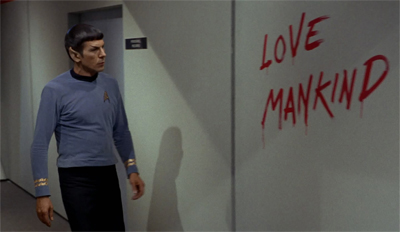
Star Trek is, by its nature, an inherently optimistic television show. I seem to keep mentioning that in these reviews, as the first season of the show subverts and plays with the notion of an idealised future. However, despite the suggestion that evil is necessary in The Enemy Within or the death of the last of a species in The Man Trap or the suggestion that man’s next evolutionary phase would be truly horrifying in Where No Man Has Gone Before, Star Trek is still a hopeful vision of a possible future. It’s a story about a world where mankind hasn’t wiped each other out and where we can go (relatively) peacefully among the stars. It’s a world without racism or classism. There is sexism in Star Trek, but I’ll give the producers the benefit of the doubt and assume it’s not intentional.

So The Naked Time feels a little weird, being – as it is – a story about the collapse of civilisation at the end of a world. Not our world, mind you, but there’s a very clear sense of social collapse mirrored in the literal collapse of planet Psi-2000.

How logical...

How logical…

Continue reading

Star Trek – The Enemy Within (Review)

To celebrate the release of Star Trek: Into Darkness this month, we’ll be running through the first season of the classic Star Trek all this month. Check back daily to get ready to boldly go. It’s only logical.

One thing that I don’t think the original Star Trek gets nearly enough credit for is the quality of the writers that Gene Roddenberry recruited to contribute scripts. Television obviously operated under a different model at the time, but there’s an impressive selection of science-fiction literary giants who contributed scripts to the show. More than that, it’s impressive how many of those stories became truly iconic Star Trek stories.

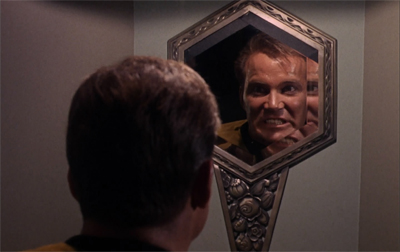
The Enemy Within is the work of author Richard Matheson, best known for stories like I Am Legend or What Dreams May Come. It’s very much a high-concept science-fiction story, but it’s also notable because it establishes two of what would become the show’s favourite tropes: transporter accidents and evil duplicates. Indeed, the two devices would be reunited in the following season’s Mirror, Mirror. These narrative elements even featured in the last season of Star Trek: Enterprise to air, in episodes like Daedalus and In a Mirror, Darkly.

Perhaps it’s a demonstration of how important these outside writers were to the development of Star Trek as a franchise that Matheson would effectively codify two stock narrative devices that would still be in use four decades later.

Mirror, mirror...

Mirror, mirror…

Continue reading

Star Trek – Mudd’s Women (Review)

To celebrate the release of Star Trek: Into Darkness this month, we’ll be running through the first season of the classic Star Trek all this month. Check back daily to get ready to boldly go. It’s only logical.

I think it’s fair to say that Star Trek had some gender issues. I say that as a fan of the show, and as a person with an immense fondness for the ensemble. It’s tempting to write off those sexist moments and decisions as attitudes that were socially acceptable at the time. After all, the sixties are almost half a lifetime away at this point. However, that doesn’t account for the fact that many of the same gender issues plagued Star Trek: The Next Generation in the late eighties, which lost two of its three female leads in its first season, and opened its second year by subjecting the remaining female lead to The Child.

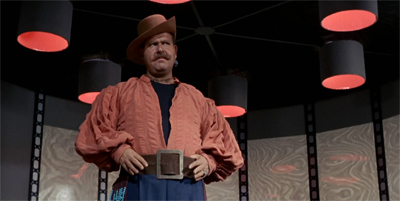
Even disregarding that, though, there comes a point where even the time when a work was produced can’t excuse certain attitudes or approaches. Star Trek doesn’t feature too many strong female characters, relegating recurring female characters like Uhura and Janice Rand to the background. This is dodgy enough, but the show’s problems with gender become a lot more obvious when a show throws sexuality into focus. Mudd’s Women is such a show. It famously introduced one of the few recurring non-crewmember characters, and it plays into the “Star Trek as space western” theme, but it is also very sexist. Very, very sexist.

Mudd-ying the waters...

Mudd-ying the waters…

Continue reading